
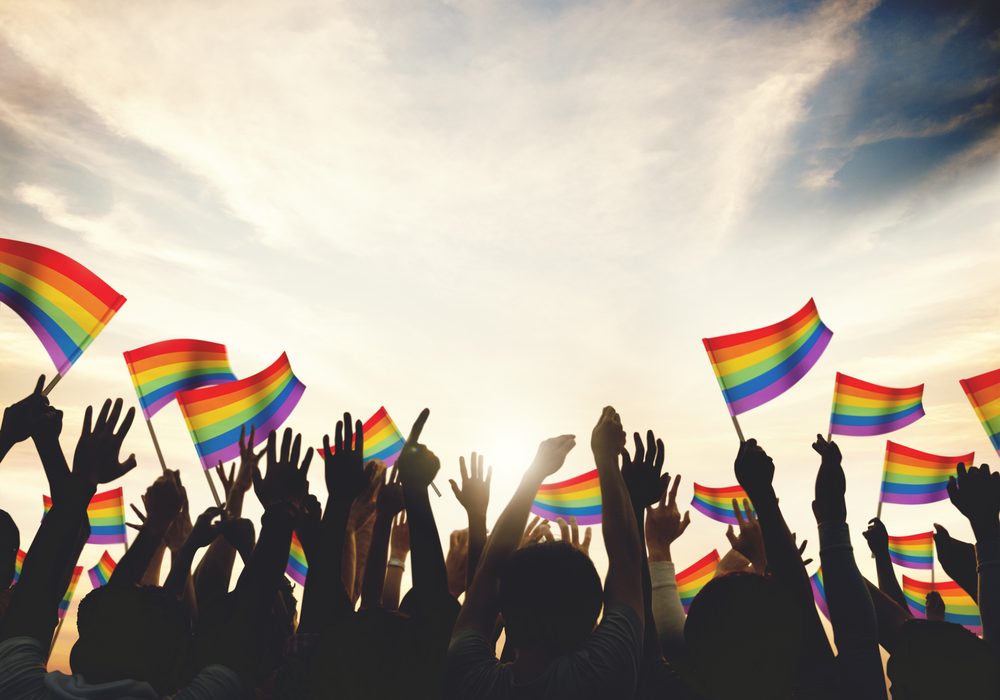
(Photo Credits: Rawpixel.com from Shutterstock)
For decades, lesbian, gay, bisexual, transgender, queer, intersex, and asexual communities have stood together under one rainbow umbrella. But in recent years, new movements have emerged pushing for a separation—arguing that the issues faced by LGB people and those of transgender and queer-identifying individuals are different enough to warrant distinct spaces.
Today, with 17 other national LGB organisations, we are launching @LGBinternationl pic.twitter.com/q6P7fzX73K
— LGB Alliance (@AllianceLGB) September 20, 2025
Just recently, a gay man boldly declared online, “THERE IS NO LGB WITHOUT THE T!” and doubled down with, “I HAVE SAID WHAT I SAID,” reigniting a debate that has been simmering for years. Some gay men applauded the call for solidarity, while others argued it’s time to rethink how the LGBTQ+ community defines itself. Are lesbian, gay, and bisexual people forever linked to transgender and queer movements, or can these groups fight for equality on their own terms?
Some gay men feel the question isn’t about rejecting trans people, but about clarifying identity. As one commenter explained, “To be fair I have no problem with trans people, but I truly have no idea what that has to do with myself or my identity as a gay man.” This sentiment captures a key tension: sexual orientation (who you love) is not the same as gender identity (who you are), and some feel lumping them together creates unnecessary confusion.
Another guy broke it down more bluntly. He said, “Actually there is. Lesbian, gay, and bisexual are sexual orientations. Transgender is NOT a sexual orientation.” Here, the concern isn’t hostility—it’s about definitions. For some, the LGBTQIA+ acronym bundles together identities with overlapping but distinct struggles, masking critical differences in experience and advocacy.
Others pointed to how the current umbrella came to be in the first place. “‘LGBTQIA’ lumps together a lot of disparate groups simply on the basis of one theme of ‘not straight cis.’ Ultimately, it’s a definition foisted on these separate communities by those who do not belong to them to reduce any sexual/gender expressions they do not and do not care to understand to a monolith. It’s time to admit that in many respects, we have different and sometimes competing interests.” This perspective argues that while solidarity remains important for political power, honesty about differences may lead to more effective activism.
Of course, not all critiques are purely philosophical. For some, tensions arise from specific behaviors within the movement. “Sure, I’ve never had an issue with transgender people, but a lot of the Q+/T allies that are annoying to deranged and hurt the Ts cause. When I get called a nazi because I don’t think kids should be put on hormones, it makes me draw back.” Comments like this show how online discourse, particularly from vocal activists, can alienate even those who support transgender rights in principle.
Others go further, suggesting the LGBTQ+ umbrella itself obscures the realities of each group. “The truth is, the LGBTQ+ umbrella term conflates sexual orientation with gender identity and obscures key differences. Hell, LGB and T/Q+ have broadly divergent aims.” For these individuals, separating LGB from TQIA is less about exclusion and more about strategy—allowing each group to advocate for their unique needs without being tied to controversies they don’t feel connected to.
Still, many insist unity is essential. The original poster’s statement—“THERE IS NO LGB WITHOUT THE T!”—reflects a belief that the fight for equality is strongest when all marginalized identities stand together. Others echoed this by reminding readers that division only serves those who oppose queer rights altogether. As one person summarized, “No one wants to exclude the T because we don’t like them or don’t think that they are deserving of their place in the sun… Rather it is because we have different issues, problems, and challenges… We are cousins, not siblings.” He added, “Otherwise, what essentially ‘LGBTQIA+’ ends up being is it does not define us by who we are, but it defines us as who we are not. You might as well call us ‘NHC,’ Non Heterosexual Cis.”
Having said all that, what do you think, Adam4Adam blog readers? Should LGB and TQIA remain united for political solidarity, or is it time to acknowledge the growing differences in goals and experiences? Have you personally felt tension in LGBTQ+ spaces over these debates? Does separating sexual orientation from gender identity empower everyone—or risk weakening hard-won rights? Share your experiences and perspectives in the comments section down below.
being LGB and not accepting of T is so straight person coded https://t.co/EcxI1P58rY
— Clouds 🌧️ (@cloudysprinkles) September 21, 2025







Oooo… These comments/opinions will be interesting lol
yo, love your last name! n’me of the g’me
I don’t know who you are but your comments are hilarious lol gotta love internet people.
They’ll line right up into “Us vs. Them”.
No respect for anyone “not like us”.
indeed. Lol.
It’s just further, division, hetero’s understand the difference, this is gay people throwing each other under the bus; like some of ‘us’ are feeding on each other.
But I digress, I’m African American, what the fuck else, is new (eyeroll)?
Question, does the African American community band together with the Hispanic and/or Asian and/or Muslim and/or ad infinitum communities to face the persecution and prejudice they have suffered over the years from others?
Yeah …ever heard the terms: POC, cultural appropriation, ethnic cleansing, systemic racism and counter culture? Learn your history about how minorities have always had to band together to be able to loudly exist in peace. Fighting together doesn’t mean we need to enjoy our newfound peace together but it sure means we need as many numbers as we have to make it there. I’m ashamed you had to ask this. I feel guilty that as a community we haven’t taught you that yet.
These people have had the illusion of grandeur; luxury of freedom; to blind them from the reality, “freedom is not free.”
As a self-educated man, about a great many things regarding history, I’ve known for a very long time, I have no such luxury of illusions of such. As an “African American” with Indigenous ancestry, I learned if from the ground up, so to speak.
It’s always been a kind of vigil, acute awareness.
That’s all garbage.
Here’s the deal, it’s about; for the “conservative” Caucasian, making sure, we don’t see ‘our’ commonalities as people of color . . . you get that right?
“Conquer and divide.”
You really think the majority of “Caucasians” think that way?
Tim13, it’s funny you should ask that; ’cause, what’s happening more and more is that more “Latin American” people are indeed, opening up about their “African ancestry” whereas, it was not to be acknowledged.
“Finding Your Family Roots” a show about ancestry/origins where they investigate famous celebrities and such, like: Mario Lopez (5%), Reuben Blades (3%) Ana Navarro (6%) etc.
It would certainly, be to ‘our’ advantage, considering the war on color, period.
Gays have nothing to do with transgenderism tho. We like biological men… transgenderism isnt a sexuality but a gender identity. Big difference.
Agreed, but what I hear, is ‘dismantling’, dividing to further concur, as a group, period. I don’t like it one bit.
And why not? What’s wrong with dismantling a ‘community’ based solely on one’s sexuality? Do we, as gays, not have every individual freedom and rights that every other American has? Dismantling the ‘gay community’, such as it is, isn’t going to lose us any rights, however the constant, never ending and irrational demands of far-Left radicals and ‘trans activists’ may very well lose us the rights we’ve already gained! Normal people, both straight AND gay, are sick of the nonsense; the demands that men be allowed in women’s sports, restrooms, and locker rooms. The policing of speech; demanding we use… Read more »
That’s a dumb question “why not” considering. I think it’s too bad, in this day and age, people are still being sacrificed, is my point, I won’t give in to that!
This is what the magas have done and focused YOUR attention on, not mine; the whole locker-room thing; men in women’s bathrooms-sports competitions, etc., it is nonsense on the behalf of Democrats, I agree.
But they’re using that, to take away every last right; everybody’s rights, period, as far as the left leaning is concerned.
It’s such a ‘dumb question’, yet you can’t answer with any semblance of an intelligent answer. Instead you babble about MAGA. It’s certainly not the Republican’s fault that the left-wing has gone insane. No one is redirecting focus, sane people are obviously upset that their teenage daughters are expected to change in locker rooms with boys and compete against them in sports.
The push to normalize putting children on puberty blockers is also a new level of insanity. Don’t blame the Republicans for pushing back on this nonsense, BLAME THE NONSENSE!
I did; you’re just not comprehending! I not addressing it, because it is insane, these dudes who want to have essentially, women’s rights.
But that, again, for sake of your comprehension, is what they are using to overshadow everything. And that’s nonsensical!
Exactly, and the demands that gay men entertain the idea of sex with biological women pretending to be gay men, (they are all over Grindr now!), or be ridiculed as ‘transphobic’, is nothing short of gay erasure! Gay/Bi individuals are NOT the same thing as ‘trans’ people.
yo, Lamar if you born in America?, then you be American-African if you born in Africa, you be African-American.
Nonsense. I and ‘we’ born here, with our ancestors being “African” in origin; in that order, makes ‘us’ “African – American” = African, firstly, then American later. Pragmatically.
Yo, Lamar Zebra is a Native Born- American of Immigrant Decent. Realistically
“Italian American”, “Irish American”, “Latin American” etc., I hear this all the time, and so do you.
I understand, we’re not monolithic as “African Americans/black” some prefer being called blk.
Historically, our first ancestors, as slaves were baptized as Christians; but it was said, “they could never really be Christians because ‘they’ are Africans, not white/us.”
That’s partly, what held the original Africans as slaves/non-Christians, because they weren’t them, historically.
So, yeah, my/our primary genetics, are of African origin, as “African Americans.”
No. Trannies are not GAY. They have gender dysphoria, that is nothing to do with sexuality, with love.
We never voted on including them. It was forced on us by gay organizations that don’t have voting. There is no one viewpoint of the community. They are harming us. More than Lesbians, even.
And yet, we’re ALL in the same boat politically.
“Gay” is the original INCLUSIVE term, it always included EVERYBODY. It was the Lesbians who first demanded special status.
Because they’re not men? I don’t fault them either.
“‘LGBTQIA’ lumps together a lot of disparate groups simply on the basis of one theme of ‘not straight cis.’”
Until LGBTQIA individuals, “The Community”, come together with each other and then respect Straights and Cisgender individuals, there won’t be equality. Hatred, disdain, and division will continue with “The Community” fanning the flames. It’ll be the usual “Us vs. Them.”
Cis is a slur to biological men and women… just wanted to inform you that.
As is Straight to those who are. Both promote hatred and division. Why should it matter that someone is Cis or Straight or L or G or B or T or Q or I or A or something else? As long as any one who is one of them makes their letter an issue, we’re not going anywhere. This is where “The Community” and everyone LGBTQIA has failed everyone else. There is no Headquarters (somewhere in the world). There no Regional or State offices. There are no City or Town offices. There are no employees. There is no budget. There… Read more »
Actually, it’s the perfect time to kick these cowards off the ship, there is no compromise on respect or freedom. Don’t try to kick people out of the movement when things get tough. If you want to appeal to your oppression, take your weak ass in for conversion. We celebrate our freedom and liberation (under attack at this very moment) due to vigilance of the trans community. Just posing this question, shows you’re shamefulness and cowardice.
…the movement…’
What is that? How do people sign up? What’s its website?
Another hero of the revolution. Shouldn’t you be manning the barricades of your latest video game?
I think that for numbers and impact it is important that the Alphabet community stands together, similar to Unions banding under one banner. However, I have to agree that what the different letters are fighting for are completely different. One group is fighting for the right to love who they want and be treated as equals under the law for doing so. One group is fighting for the right to be who they feel they are meant to be and to be treated equal under the law for doing so. Different ideals, but still falls under the basic umbrella of… Read more »
“…the Alphabet community”
What is that? How do people sign up? What’s its website?
exit stage right————>
And how is that Gender Studies degree working out for you?
Frankly I have found to many of the other alphabet letters added have set back my acceptance in the community back YEARS as a gay man. There are far too many fringe elements that have crossed over into violence bordering on insanity. I want nothing to do with those elements especially after several studies have discovered the hormones taken by these people have permanently altered brain chemistry where their cognitive functions have been severely disrupted thus damaging their ability to separate and analyze rationally feelings and function within societal norms after they have essentially driven themselves insane. In short the… Read more »
Another person who most likely doesn’t know a single trans person. You thinking drag queens are automatically a part of the trans community just proves it. News flash, drag queens have been trying to erase trans people from their community in their own self-hating ignorance, too. You are obviously not gay, you are a product of the hate you were raised under and your strength only comes from the privileges of being a male.
I see trans persons every day on my way home from Work. Selling 5 dollar BJs on Santa Monica Blvd. Trickle down economics.. or dribble as the case might be
“And I suppose having 8 Trans persons shootings recently only confirms these early studies.” Now maybe you can tell us how many shootings there were in the same period of time that were committed by cis-gendered people. We await your response with bated breath.
Interesting how the trans women didn’t abandon their B&G brothers and B&L sisters during stonewall. We are the reason gay people are allowed to marry and for you to forget that our fights have been intrinsically linked since the beginning of our persecutions is insulting and degrading and frankly we don’t need even MORE of the world abandoning our trans peers and elders. We actually need more support and solidarity than ever before and I can’t believe people need to say that. This is misogyny this is homophobia and it’s transphobic and i know this is a hot button word,… Read more »
I, too, wondered what infected MAGAt wrote the post. No, the info (presumably) he writes is total BS. We are one, and one for all. No, folks, there is no schism in PRIDE and the Rainbow. Rumors of it are BS served up fresh. United We Stand.
Boy/Girl/Thing I didn’t sign up for your revolution. Rainbow marxism is silly AF. Don’t know what you’ll do when Mommy’s basement is no longer available, but homeless shelters are taking reservations
Maybe you’ll wake up one day, when they come for you. You weren’t living in the days of Stonewall and saw how dividing us, the non-het, allowed us to be beaten to a pulp, turned down for jobs, or worse, murdered. We protect our kindred non-het folks, because we are them, brother. Me? I had to change your damn diapers. Wipe your nose. Teach you ABCs. Then I taught thousands of students across the planet. And I still believe that the rainbow needs protection, not Marxism (do you even know what that means?), just PRIDE. My sainted mother had seven… Read more »
Tool. Take your ass to Portland. Some men have jobs and lives. Obviously you do not, and won’t be happy until my tax dollars pay for your career as an internet troll
Yes .
T has nothing to with LGB so I don’t understand why they lumped T with the LGB to begin with. Besides lot of T consider themselves “straight” once they transition… trans man dating a biological woman and transwomen dating only biological men… that certainly doesn’t belong lumped into LGB sexuality.
The I only thing I can say is that united we rise and divided we fall. Even today, look how much hostility and discrimination we still get while united together as one, just imagine divided. We cannot fight each other if we want to win.
I am familiar with Gay, Lesbian and Bi.
Everything else is their own thing and have nothing to do with the three above.
You’re in an A4A comment section, and you have nothing to do with gay, lesbian, or bi? Okay, girl.
I divorced from them long ago and reject everything about leftist lunacy and identity politics
I hate to break it to you, but identifying as gay is a form of identity politics.
Agreed! So tired of the never ending trans agenda, and so are everyone else with half a brain!
I think the divorce is long overdue. I don’t want to be associated with the trans or lesbian crowd. It’s bad enough being associated with the whackos in the gay crowd. There’s too much damned “victim status” lust among the LGBTQEIEIO fanatics. I refuse to let my sexuality identify who and what I am. The way I live my life and the things I do or don’t do should suffice to identify who and what I am. I don’t need to wear anything on my sleeves, paint my hair, dress a certain way, get tattooed all over the place, or… Read more »
No one is suggesting separating from lesbians. The L in LBG stands for … “lesbian”.
Agreed. This whole Alphabet Mafia crap has gone on too long. Just like gay bars, the world has moved on. The grants that supported the self-appointed “Leaders” have dried up and I sure as hell don’t feel like supporting rabble rousers. Victimhood should not be a career choice.
YES! EXACTLY! My sexuality isn’t my entire personality! I don’t require ‘rainbow’ reassurance everywhere, either..
Nothing like bringing up trans people that make even people who are gay intolerant. Some of the comments and thumbs up on this are depressing but a reminder of how ingrained hate can be
The communities are stronger together and remember what happened at Stonewall didn’t happen because of a straight person or a gay man. It happened and started because of a trans woman.
“The communities are stronger together…”
How? How do people sign up? What are the websites?
Much lip flap. No togetherness. No action to bring people to understanding. Much action that promotes hate and division.
I have trans friends, and trans family members… But even if I didn’t know a single person who was trans, I would still be marching with them, protesting with them, supporting them, because human rights are not negotiable, nor should we just keep dividing ourselves up into smaller and smaller groups. Groups. It reminds me of Monty Python’s life of Brian where people were arguing over. If they’re the People’s front of Judea, or the popular front of Judea, or the Judean People’s front. They managed to divide themselves into such small parts that they became totally ineffective. Cutting trans… Read more »
Assuming you are referring to transgenderism as opposed to transvestitism, I wish you and your friends well but please don’t insist on or expect me to participate in other people’s delusions or fantasies. I will try to be helpful toward transgender people and I might even use their pronouns if they want. But I will never quite trust their judgment because too many times I have seen their logic train leave the station and never arrive at the next stop. We ARE smaller groups. We are individuals. No two are exactly alike. There may be some commonalities in various areas… Read more »
This site is rife with Prager University dropouts. In between sucking cocks, they spread this kind of nonsense
PragerU is an American non-profit advocacy group that creates content promoting conservative viewpoints on various political, economic, and sociological topics.
It is as questionable and biased in its reporting as numerous liberal advocacy groups are.
Any references to it is usually a slur.
It is what it is. They’re here as well. Trolling and cruising.
Really? You know there how? What’s the flag or name that indicates such?
Regardless of how one identifies, the idea of not defending the rights of others is a losing proposition. As a gay man, I have worked for LGBT organizations where colleagues, particularly gay and bisexual men, felt it was unfair to be lumped in with the trans-community. But here is the thing, the larger struggle is to make way for a world where people are not punished for living a life perceived as not conforming to traditional expectations of gender. Sorry to pop the delusional bubble of many who feel that their issues are not the same as those who are… Read more »
I don’t support the rights of pig fuckers, drug addicts, freaks that insist on terrorizing children in restrooms or elsewhere. This bullshit is all about the money behind the scenes. Freaking asinine to be involved with any and every group that manages to pay their way into the Alphabet umbrella.
You’re absolutely correct. The next thing you know, they’ll be insisting that LGB community supports be*stiality and p*dophilia! It’s time to dissociate from the mentally ill degenerates!
Sure – there can be SEPERATE organizations and STILL support each other 🙂 It all UP to the INDIVIDUAL 🙂
While it is nice to think that society has advanced to the point where one can separate themselves from another group, this is not reality. The straight bigot doesn’t care if you are gay, bi, trans, or anything else. All of you will be discriminated against with the same hate they are known for. A racist rarely differentiates their hate towards other races from their own. Hate laws, for example, typically protect all of the LGBTQ community. Start separating yourselves now, before the battle is won and the war to achieve complete equality and freedom is lost.
I hate to say this… but to be honest, The LGB are the best people. But those who are T and Q.. there’s been an awful lot of arguements. Especially among the T group. The T group is nothing but trouble. LEGAL trouble. While the Qs are laying low to hope to stay out of the spotlight.
Whoever thought to hitch the TQ on to the LGB ought to rethink what they did. Disconnect it and we’re moving better.
Yeah …. Nothing like slinking off and allowing other people to be the targets for a while. I hate to tell you this but they’ll come for you just the same. We either stand together and support each other and embrace each other and fight the growing fascism and hatred that’s sweeping this world or they will divide us and we will die alone.
Paranoid much? Do your own fund raising and shit stirring. Supporting psychotic mental cases doesn’t benefit those of us with real jobs and lives. Priscilla Queen of the Desert was a film. Reality is much more dark, and it’s time to recognize the fact that supporting nut jobs as part of a Movement is counterproductive
This just shows once again how so many people even in marginalized community are ignorant and hateful.
What it shows is your inability to accept reality and a misunderstanding of what fascism is. You haven’t seen fascism. I bet you have never sat in a gay bar when the cops came in looking to give hickory shampoos. That crap doesn’t happen any more because those before you stood up and stopped it. Mission accomplished. Fascism is repression by the state. We have a gay secretary of the treasury, members of congress, cops, executives, etc. People marginalize themselves when they act or speak like idiots. Even most gay people don’t want to be associated with people like that.… Read more »
Just shows how many in so-called ‘marginalized’ communities aren’t falling for the perpetual victimhood scam.. which clowns like you insist on being the ‘leaders’ of. So we are all supposed to support whomever You decide? F…k Off, I didn’t graduate from 6th grade to follow your bullshit
It is time to end the political indoctrination and manipulation of less-extreme individuals, and the coercion to tolerate the *unacceptable* agenda of “the Community.” P3d0philes have NO PLACE among us, especially when they co-opt our identity to hide felonious and unacceptable acts of cruelty and abuse against children. Cut the “TQIA+” from our ranks like the cancer they have proven themselves to be!
Wow, that was a hateful ignorant argument that just repeats the same right-wing bullshit. The fact that three people gave a thumbs up to your crap is depressing
You want to speak out against the pedophiles. The fact that the vast majority of the ones who have been arrested have been Republicans, and that the Republican party is currently protecting very wealthy pedophiles, very likely including the three four-time convicted felon and rapist in the White House should tell you everything you need to know.
“… vast majority…” “Fact?”
There was a survey? A poll? A study? A news story?
Pedophilia sees no social affiliation. Left, Right, Independent, or non-political. No particular race, ethnicity, religion (or not). Gender as well.
There are no pedophiles in the Democratic party, of course. And there’s no protection of them going on there. Right?
The Republicans engage in reaction formation far more. That is they outwardly Express opposition to something that they themselves do. Just Google Trump supporter child porn and you will be horrified at the number of people who were at campaign level positions who spoke out calling Democrats the groomers who turned out to be child pornography users themselves
Red flag. Be sure of your facts
Google Biden, Obama, and Clinton … you get the same results.
I’m afraid he doesn’t realize the internet is full of curated intentionally misleading links, searches, and content designed to convince those who won’t think for themselves that their fantasies are true.
Just so you all know, I gave you and another guy a thumbs up and your count went DOWN. Clicking the down thumb also makes a count go down. It would seem somebody likes to play fuck-fuck games with the forum thumb votes.
I guess that I don’t have an issue with the “T”, but when the list of letters becomes longer and longer, it begins to mean everything and nothing. For instance, why are people who have no interest in sex (“A”) lumped in with LGB? Do they face discrimination in the workplace? Are their marriage rights under threat? It is becomes more and more difficult to advocate for anything when there are too many competing priorities.
As someone who just identifies as “G,” I would feel just as awkward associating myself with trans people under an inclusive umbrella as I would being an Irish person asking to be included in an African-American group of people just because we were both repressed in 19th century America. I don’t see why the differences between LBG and TQIA+ can’t be acknowledged, but still can mutually support one another in their political and social goals. I think most of us are able to walk and chew gum at the same time.
I have thought for years that “lgbtqia+” had gotten out of hand, and the better name would “non-straight community.” Seriously, it’s so bad that they put a “+” on the end in an effort to stop more letters from being added.. the acronym unfairly lumps disparate communities, with differing needs together. Much easier for republicans to ignore and degrade everyone that isn’t a straight Christian.
There are many Gay Republicans, including one appointee of the current President to a key position in the Administration. Not all Democrats are LGTBQI+ supportive.
But let’s not have reality get in the way of the promotion of stereotypical hate and division.
Give us back LGB, at 78 it has been a long haul to get where we are. BUT I am not at giving children drugs or operations. When I was that age I didn’t know what I was. It took another 13 years of trying to decide what I was. NOT drugs and surgery. Let there mind grow, develop into what they really are. Counselling for sure drugs and surgery NO.
You are parroting absolute falsehoods and distortions. Perhaps you need to be more educated on the subject before you spread nonsense
https://www.factcheck.org/2023/05/scicheck-young-children-do-not-receive-medical-gender-transition-treatment/
I love that you give people actual facts about how they are spreading lies and they will vote it down because there are just as many stupid gay men as there are stupid straight men, and transphobia is just as rampant. During the AIDS crisis of the 1980s, it was the lesbians who stepped up to be The advocates and caretakers, in spite of the years of them being often ostracized by the gay community. And now some of you people will be more than happy for the trans community to suffer because you think you’re safe. I’ve got news… Read more »
Reading some of these comments I’m struck by how totally horrifyingly self-destructive so many people are in the gay community against others. It’s like a whole bunch of log cabin. Republican freaks showed up spreading the usual GOP lies, happy to throw trans people under the train in the hopes that they’re not going to be put on the tracks next.
Actually, it’s like a whole bunch of LGTBQI+ freaks showed up spreading the usual lies, happy to throw trans people … and everyone else … under the train in the hopes that they’re not going to be put on the tracks next.
There are many pro-LGTBQI+ Republicans. And many anti-LGTBQI+ Democrats.
The same transphopbs always with their b.s. here
So sad. The LGBTQI2A never should have gotten here! Let us know how to participate to mitigate this tragedy. And stop it! Everyone needs to come together! Who do we contact!? When and where are the proceedings?
As a very masculine gay man I find no commonality with those under the “TQIA+” crowd. The TQIA+ crowd seemed to have hijacked the LGB crowd. Now people think all gay people are like the TQIA+ crowd. My opinion only.
There are far too many who are continuing to support a *Leninist* demoralization campagn of the 1920s. We do not need the filth of society labelling themselves as “one of us” to gain credibility. The number of individuals with certifiable mental illness, in the “others” community, has become staggering; being a “sexual other” does not qualify an individual to piggyback on the work and sacrifices of another community. Gay men fought for their rights, and had to accept fair compromise in return. Trans individuals assumed this included them; it didn’t. Gay men had to separate themselves from the mentally ill… Read more »
I have no idea what you are talking about. Gay and Trans have NOTHING to do with each other. Gay is who you love who is the SAME GENDER. Trans is about gender only! A woman with a vagina who transitions to being a “man” does not become a gay man. She is still heterosexual. Trannies have ruined the gay community with their intrusions, and their hijacking of many organizations and programs, forcing all to fit their agenda and submit to their mind and language control. They may cause us to lose our hard-won rights. The whole trans movement is… Read more »
Honestly, I don’t feel my sexuality justifies a ‘community’ at all. It’s just a small part of who I am. With that said, I absolutely am NOT part of the TQ+ group. Those suffering from the mental illness or socal contagion called transgenderism have nothing to do with myself nor my sexuality! This insane Left-wing radical gender ideology has gone way too far! Men in women’s spaces, women with elective mastectomies showing off their scars and claiming to be ‘gay men’ on Grindr, ‘preferred pronoun’ nonsense, people claiming men can get pregnant and women can have a penis, children being… Read more »
I never understood why transsexuals were included with LGB other than being disparaged groups. I did not have any interest in dressing in women’s clothing, acting like a woman, or exploring the possibility of having an operation and actually changing my sex. I never felt a kinship with transsexuals nor could I relate. As a gay man, I was only interested in engaging in sexual situations with other gay men, certainly not “chicks with dicks” and anything that it entails. I fully support the equal.rights and full protection under the law of all trans people, and I believe that separating… Read more »
I see a lot of angry people here ;P
Yes. All of these groups should’ve never been married in the first place. Gay, lesbian and bisexual are sexual orientations, the TQI2A are not. Grouping all as one big community never made sense from a logical standpoint. You actually compromise the sense of community when there are such stark contrasts within, and I would point to the “we are all the human race” argument as proof. Trans was previously misunderstood to be an issue of sexual identity, but we’ve known that is not true for a long time now. Many Trans people consider themselves hetero while the rest can actually… Read more »
I’m not involved with the LBG la la la+2 crowd. I will say this, though: sometimes inclusion can be a setback. LBG did years of work to bring their group to light. They endured a lot of shit and paved roads for other LBG’ers. Now it seems like everyone with a slightly different take on things wants to be recognized. I think it’s bullshit. I think if you really think yorur part unicorn and part squirrel, you need to seek professional help. I can agree there are opposite-sex and same sex people in the world, but past that, you get… Read more »
In 1970, I with two friends started a gay lib organization at my university, Central Michigan U. We had both men and women in the group. Lesbians were an equal part. I was president,a friend, man was V.P. and a good friend a Lesbian was the sec. She offered to do that job. I have a very hard time with Queer. Growing up in the 50s and 50s, it was a very disgusting word. To be called Queer was a total insult, and now I hate that word just as much. I don’t know why anyone would want to be… Read more »