

(Photo Credits: Jo Panuwat D from Shutterstock)
As 2025 comes to a close, the global LGBTQ+ community finds itself standing at a familiar crossroads—celebrating hard-won progress in some parts of the world while bracing against renewed resistance in others. This year reminded us that equality is neither linear nor guaranteed, but something shaped daily by laws, culture, courage, and collective action. From landmark court rulings to alarming legislative attacks—particularly against trans youth—2025 showed us how far we’ve come and how fragile those gains can still be.
Below is a chronological overview of key developments that defined the global LGBTQ+ landscape in 2025.
The year opened with a notable legal milestone in Liechtenstein. On January 1, legislation formally took effect, granting same-sex couples the right to marry and bringing the country in line with a growing number of European states that recognize marriage equality.
However, momentum shifted sharply in the United States later in the month. On January 20, President Donald Trump signed Executive Order 14168 titled “Defending Women from Gender Ideology Extremism and Restoring Biological Truth to the Federal Government.” The directive instructed federal agencies to define sex strictly as male or female based on biology, eliminate references to “gender” in official materials, halt federal support for gender-affirming healthcare, and restrict transgender people from using federally funded single-sex facilities that align with their gender identity. It also limited the application of workplace protections established under Bostock v. Clayton County within federal activities.
Days later, on January 23, Thailand officially enacted its Marriage Equality Act, becoming the first country in Southeast Asia to legalize same-sex marriage. Thousands gathered in Bangkok for weddings, vigils, and celebrations, marking years of activism finally realized, as nearly 2,000 same-sex couples registered their marriages nationwide on the law’s first day in force.
On January 27, Idaho lawmakers passed House Joint Memorial 1 (HJM 1), a resolution urging the U.S. Supreme Court to revisit its landmark 2015 Obergefell v. Hodges decision, which legalized same-sex marriage nationwide.
The month concluded with two additional executive actions from President Trump. On January 28, he signed “Protecting Children from Chemical and Surgical Mutilation,” directing federal agencies to curtail access to gender-affirming medical care for minors (officially known as Executive Order 14187). The following day, January 28, “Ending Radical Indoctrination in K-12 Schooling” was issued. Also called Executive Order (EO 14190), the order directs the withdrawal of federal funding from schools that support the social transition of transgender students, including the use of chosen names, pronouns, or restrooms and related “gender ideology.”
February’s cultural calendar was busy. On February 4, the 66th annual Grammy Awards recognized openly queer artists whose success affirmed LGBTQ+ creativity and influence on global music and arts. For example, openly pansexual American singer, songwriter, and actress Miley Cyrus made Grammy history by winning Record of the Year and Best Pop Solo Performance for her song Flowers.
On February 5, President Trump signed another executive order, “Keeping Men Out of Women’s Sports,” mandating that Title IX be interpreted to exclude transgender girls and women from participating in female sports categories.
That same day in Argentina, presidential spokesperson Manuel Adorni announced that President Javier Milei had approved changes to the country’s 2012 Gender Identity Law. The revisions barred minors from accessing gender-affirming medical care, reversing a cornerstone of Argentina’s previously progressive approach to trans rights.
On February 28, Iowa Governor Kim Reynolds signed Senate File 418 into law, removing gender identity as a protected category under the Iowa Civil Rights Act—making Iowa the first U.S. state to repeal such protections.
March marked a significant clampdown on LGBTQ+ visibility in Hungary. On March 18, the Hungarian parliament voted overwhelmingly to prohibit LGBTQ+ public events, including the annual Budapest Pride march.
Later in the month, on March 28, Utah became the first U.S. state to ban LGBTQ+ pride flags from government buildings and public schools, a move critics described as symbolic censorship.
April delivered a mixture of affirmation and restriction. On April 4, the Roman Catholic bishops’ conference in Germany released new guidance allowing blessing ceremonies for same-sex couples, following Pope Francis’ Fiducia supplicans. The document offered practical recommendations for liturgy and scripture use.
In Hungary, setbacks deepened. On April 14, lawmakers passed constitutional amendments banning public LGBTQ+ events and formally defining gender as exclusively male or female.
Meanwhile, on April 16, the Supreme Court of the United Kingdom ruled that, for purposes of the Equality Act 2010, legal sex is determined by sex assigned at birth, excluding transgender women from the legal definition of a woman.
Just one day later, on April 17, Lithuania’s Constitutional Court granted same-sex couples the right to register partnerships through the courts until comprehensive legislation is adopted.
April closed on a positive note in Poland, where the last remaining “LGBT-free zone” was officially dismantled on April 30.
Late May marked the beginning of Pride season—and with it, rising tensions. On May 14, authorities in Russia intensified enforcement of its so-called “LGBT propaganda” laws, detaining activists and canceling planned community events.
On May 22, Italy’s Constitutional Court ruled that children born to lesbian couples must have both parents automatically recognized on birth certificates, strengthening legal protections for same-sex families.
On June 2, the Supreme Court of Puerto Rico ruled that individuals may request an “X” gender marker on their birth certificates, expanding nonbinary recognition.
Just over two weeks later, on June 18, the Supreme Court of the United States upheld a Tennessee law banning gender-affirming care for minors in a 6–3 decision, clearing the way for other states to enact similar bans.
Puerto Rico reversed course on July 17, implementing a sweeping ban on gender-affirming care for anyone under 21, eliminating public funding, and imposing severe penalties on physicians who violate the law. LGBTQ+ advocacy groups immediately announced plans to challenge the ban in court.
The following day, Cuba took a contrasting step forward. On July 18, the National Assembly approved legislation allowing transgender people to change their gender on official documents without undergoing surgery.
On July 29, Saint Lucia’s High Court decriminalized consensual same-sex relations, striking down colonial-era laws.
On September 1, Burkina Faso enacted legislation criminalizing homosexuality, with penalties including prison sentences and fines.
Later in the month, on September 26, Slovakia’s National Council passed constitutional amendments recognizing only two genders, restricting gender transition, and banning adoption by same-sex couples.
In the United States, the Supreme Court announced on November 7 that it would consider whether to hear a challenge to same-sex marriage, reviving anxieties about the future of Obergefell v. Hodges.
On November 19, New Zealand announced a ban on puberty blockers for minors with gender dysphoria, set to take effect on December 19. The government cited the Cass Review and said the restriction would remain until the completion of a UK clinical trial.
In addition, on November 25, the European Union’s top court ruled that same-sex marriages must be recognized across all member states, including Poland, Bulgaria, Romania, and Slovakia, reinforcing freedom of movement and family recognition within the bloc.
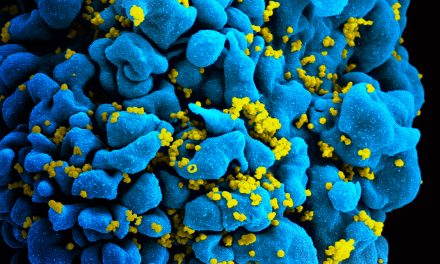
Lastly, World AIDS Day was observed globally on December 1, marking continued efforts to remember those lost to HIV/AIDS while reaffirming commitments to prevention, treatment, and care. In 2025, LGBTQ+ advocates used the day to spotlight persistent disparities affecting gay men, transgender women, sex workers, and communities of color, who remain disproportionately impacted by new HIV infections. While medical advances have made HIV a manageable condition for many with access to care, activists emphasized that stigma, criminalization, and unequal healthcare access continue to undermine progress. Events and campaigns worldwide called for renewed funding, expanded testing, and culturally competent healthcare, framing World AIDS Day as both a moment of remembrance and a reminder that the epidemic is not yet over.
The year 2025 was defined by tension—the push and pull between recognition and resistance. LGBTQ+ people were more visible than ever, yet that visibility came with consequences.
Still, the year proved something enduring: even under pressure, the community continues to organize, celebrate, grieve, and hold on to hope. The fight for dignity, safety, and joy goes on—into 2026 and beyond.






finality at the end of any given year life intrudes and along comes the resulting artifacts of 365 days/52 weeks and 12 months accumulations
Why do trans people get lumped in with gay and lesbian. Seems to be some confusion amongst trans.
Media A Go Go!
Trans are part of our community. Prejudice among non-conforming genders, including bisexual and homosexual peoples has become rife– even among people purported to be gay. We, the non-heterosexual and non-conforming must protect those who are like us.
No, they are not. Gender dysphoria has nothing to do with sexuality. This has just been a ruse to allow straight women to invade our community. They are not “like us.” Not at all. They are like schizophrenics, bipolars, etc. We never got to vote on their “inclusion” invasion. And they do take over our organizations and programs to suit themselves, and censor/cancel anyone who objects.
For some, 2025 was defined by tension—the push and pull. Both sides continue to organize, celebrate, grieve, and hold on to hope. They both fight for dignity, safety, and joy into 2026 and beyond. For everyone. As long as “The Community” sees itself as special, supreme, and unmovable … with little respect and understanding for others’ views (to which others are equally entitled in our society) … change will continue to happen slowly as it has for decades. I’ve been around long enough to see changes. Changes from the 1970s until now. Changes within my family, friends and coworkers toward… Read more »
to acknowledge progression and prizes is to preempt the excuses to point fingers at those who have no problem with equal rights but who have problems with all the exaggerations and misguided vitriol.
Who the HELL is so STUPID that they don’t see POSITIVE CHANGES!!!??? We’ve CUM a long way from frigging SODOMY laws and GAY BLACKMAIL!!!! Just DON’T put up with ANY HOMOPHOBIA – I’ll NEVER turn the other cheek – BET ON THAT!!!
I just read month by month the year in review as documented so thoroughly by our a4a moderator. Wow, a lot went on in one year. I’m going to go in a different direction and hope people in general, will be nicer in 2026. That’s it!!! While driving on a country road yesterday, I accidently pulled out in front of a middle-aged lady. She violently caught up with me and we got to the next red light at the same time. She rolled down her window and cussed me out. I’m glad I was driving alone and didn’t have my… Read more »
you had the unfortunate experience of engaging a raging Cunt! Be grateful you are gay and spared day-to-day existence with Cunt of any kind!
You’re lucky she didn’t go full MAGA and shatter your windshield.
she might have been a liberal and sent a drone in the direction of your car.
..or she could have went full Jan 6 and doused you with her new Legionnaire strain. This cunt might have been from Florida, be cautious with those types!
Maybe you should STOP making everything Political DUDE!!!! As If the LIBTARDS are as PURE as the driven SNOW!!!!! 🙁 WHAT A JOKE!!!!!!!!!!!!! lolololol a BAD ONE!!!!
MOST of the CUNTS are LIBTARDS!!!!!!!!! 🙂
I DO thank the good LORD everyday that I AM a GOLD STAR GAY and don’t have to DEAL with CUNTS on a DAILY basis – ALTHO I have NO qualms at ALL of giving back EXACTLY what I get from them when they ACT LIKE ONE!!!!!!!! 🙂 LOLOL Who GIVES a SHIT if they are females – NOTHING special about that!!!!!
Look at all the PUSSY whipped ones voting down comments that stand up for MEN!!!!!!!
I gave you a thumbs up. Heck yea.
I agree with you Jeff but as an African- American, I have to be careful that things don’t escalate because if they do, it’s a good chance that I won’t be judged fairly. We have been trained from our elders early in life, to be cautious and to always keep that in mind. I know it’s 2026 but I know you see what’s been happening lately with MLK birthday, Juneteenth, dark skinned immigrants passage to America different than others etc.
Yean man but there’s A BIG difference between being a MAGTURD and being a MODERATE that doesn’t agree with all the COMMIE/SOCIALIST libtard crap that wants to REWARD NEGATIVE behaviors and PUNISH the HARD WORKING tax payers with the BURDEN to SUPPORT all the LOSERS By Choice!!!!
Here’s ONE welfare and food stamp loser to down vote a COMMENT that SUPPORTS personal responsibility!!!! MILLIONS more of them out there tho – the state of the USA in the 21st Century – LOSERS galore!!!!!
Glad to hear you’re not MAGA!!! I’m for common sense politics whether it’s from the right or the left. I want what’s best for everyone.
YEP too bad 99% of the FOOLS nowadays are in EITHER the RED or BLUE CULT of BRAINWASHED MORONS that Can’t think for themselves!!!!
The big story not asked is, do you use conditioner on your pubic hair? If not, you should.
WHAT’S the secret to that TREND Sir VIGIL?!?!? How about the underarm area(pits)?!?! 🙂 LOLOLOL
Poor HUMORLESS morons 🙁 SAD pathetic lives 🙁
I LOVE negative votes – KEEP EM CUMMING MORONS and LIBTARDS 🙂
HELLO