
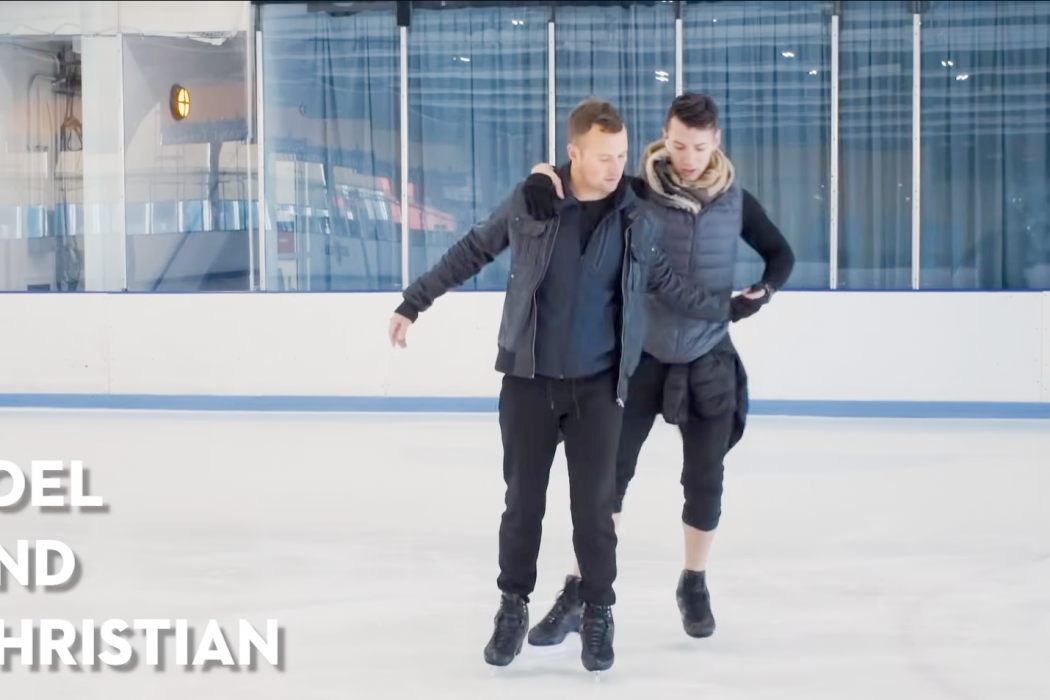
(Photo Credits: Screengrab from The New Yorker’s Official YouTube Account)
Icebreakers offers a moving and intimate look at gay figure skaters who have carved out space for themselves in a sport long shaped by rigid gender norms and stereotypes. Directed by Jocelyn Glatzer and Marlo Poras, the film blends personal stories, archival footage, and cultural history exploring how LGBTQ athletes have navigated visibility, sexuality, and belonging on the ice.
Produced as part of The New Yorker Documentary series, Icebreakers runs approximately 22 minutes and centers on the legacy of the Gay Games, an international sporting event founded in 1982 to promote inclusion and participation regardless of sexual orientation. The documentary revisits pivotal moments from past Gay Games competitions, including groundbreaking same-sex skating performances that challenged long-standing rules around gendered pairings in figure skating.
Rather than focusing on medals or rankings, Icebreakers highlights why skating matters so deeply to the people who do it. The film captures how queer skaters often find freedom and authenticity in community-based competitions after encountering limitations within elite skating structures, where mixed-gender pairings are still largely enforced. These restrictions, the film suggests, have historically sidelined same-sex couples and constrained artistic expression.
Those featured in the film include coach Wade Corbett, who speaks to the sport’s persistent homophobia and structural barriers; Laura Moore, an out lesbian skater advocating for greater inclusion; and the pair Joel Dear and Christian Erwin, whose partnership and competition at the 2018 Gay Games in Paris serve as a case study in queer athletic expression on ice. Mark Stanford also appears, reflecting on his experiences as a Black gay skater living with HIV.
The documentary moves fluidly between past and present, showing how progress has been made while acknowledging the barriers that remain. Interviews are paired with expressive skating footage, reinforcing the idea that the ice itself can be a platform for visibility, defiance, and self-acceptance. Executive producer Paul Moakley and the creative team emphasize intimacy over spectacle, allowing skaters to speak candidly about identity, fear, and pride. Read here for more information.
Icebreakers has been screened at various film festivals, including the Santa Barbara International Film Festival and the Montclair Film Festival, and is distributed through The New Yorker’s platforms. Viewers can watch the film on The New Yorker’s YouTube channel, where the documentary’s official upload is available.
Below is a direct link to the documentary as posted on YouTube by The New Yorker.






their legs will still be raised high and their legs will still be spread wide! So what will be the difference? Instead of heels; It will be skates!
LOL! LOL! LOL!
I appreciate your words
Zebra at da’ Winter Olympics Luv’ to da homies & da’ white bread!
looking real good Zebra! love the accessories, too! red brings out those stripes! a Zebra Fashionista for 2026!
This just in from my NPR feed:
“U.S. cross-country star Jessie Diggins claims bronze, medaling in third straight Olympics”
Well, that’s a surprise. She’s Straight!
A STRAIGHT MEDALING IN HER THRID STRAIGHT OLYMPICS? WAS SHE STRAIGHT UP OR STRAIGHT DOWN? OR STRAIGHT ACROSS?
not gaily forward!
It’s wonderful to see men dancing together, whether tango, polka chinata or on ice. What makes it so different is that they are parallel, not larger and smaller. It can represent friendship and working together, not necessarily romance or sex. It is a creative challenge.
I’ll get used to this. The same sex couples performing thing. Just a matter of me overcoming dance lessons where there was a firm he/she, dom/sub protocol. The “Traditional Hold” and moves seemingly orchestrated by one side of the team … they all get in my way a bit. Couples should do it, of course. Like anything, it’s their right to do it. I’m not against it, but just lagging a bit behind in being comfortable when seeing it. I’m just not “on board” with the concepts. But not against the rights of others to do it. I going to… Read more »
“GAY FIGURE SKATERS”
That’s so gay!
shut up. somebody had to say it. deal with it.